
Fade vs. Taper: What Is the Difference?
Walking into a professional shop like Evolve Barber Shop can sometimes feel like entering a world with its own language. One arrives at the shop knowing very little about haircutting terminology other than what you have seen in hair magazines, on television, or through your hairstylist, but when you go inside the shop, you will hear words like “taper,” “fade,” “texture,” and "line up" spoken by professionals who have honed their skills over many years of cutting.
For most clients, the most common point of confusion regarding terminology concerns the difference between the terms fade and taper. In everyday conversation, fade and taper are commonly used interchangeably; however, in the field of professional grooming, fade and taper represent two very different haircutting techniques, yielding distinct finishes visually and in their execution.
When seeking a specific look, the distinction between a fade and a taper becomes vital. A person's haircut is usually the first thing people will notice. When people are looking at you, the way your hair blends from the top of your head to your neck will greatly affect your overall look. If you are looking for a more traditional, conservative, basic haircut for work or a more contemporary, modern haircut for the weekend, understanding the differences between fade and taper haircuts is the first step to achieving the intended outcome.
Defining the Taper: The Classic Gradient
The taper hairstyle is a classic, subtle approach to cutting hair that follows the natural contour of the head. The hair is cut long on top, progressively shorter down toward the nape of the neck and the ear.
The most recognizable aspect of a classic taper haircut is that it will never come directly to the scalp. The shortest section of the taper is typically at the base of the top of the head, with just enough hair left at that length to make it evident that there is still a little bit of hair at the very end of the taper. Because the taper follows the natural outline of the head and hairline, it is a clean, professional way to cut hair and is often seen in a business environment. Tapers are also often preferred by people looking for an intentional yet conservative hairstyle.
How a Taper Is Built
When barbers cut a taper, they focus on the "setting," creating a tapered edge on the sides and back of the head (the bottom of the neck and the sideburns). The barber works to create a smooth, blended transition from the longest to the shortest part of the hair. While maintaining the haircut's overall shape, the barber provides a finished, sharp look with a tapered finish. A tapered look can help complete a traditional side-part or a classic crew-cut style, providing a final touch to the haircut.
Defining the Fade: The Modern Statement
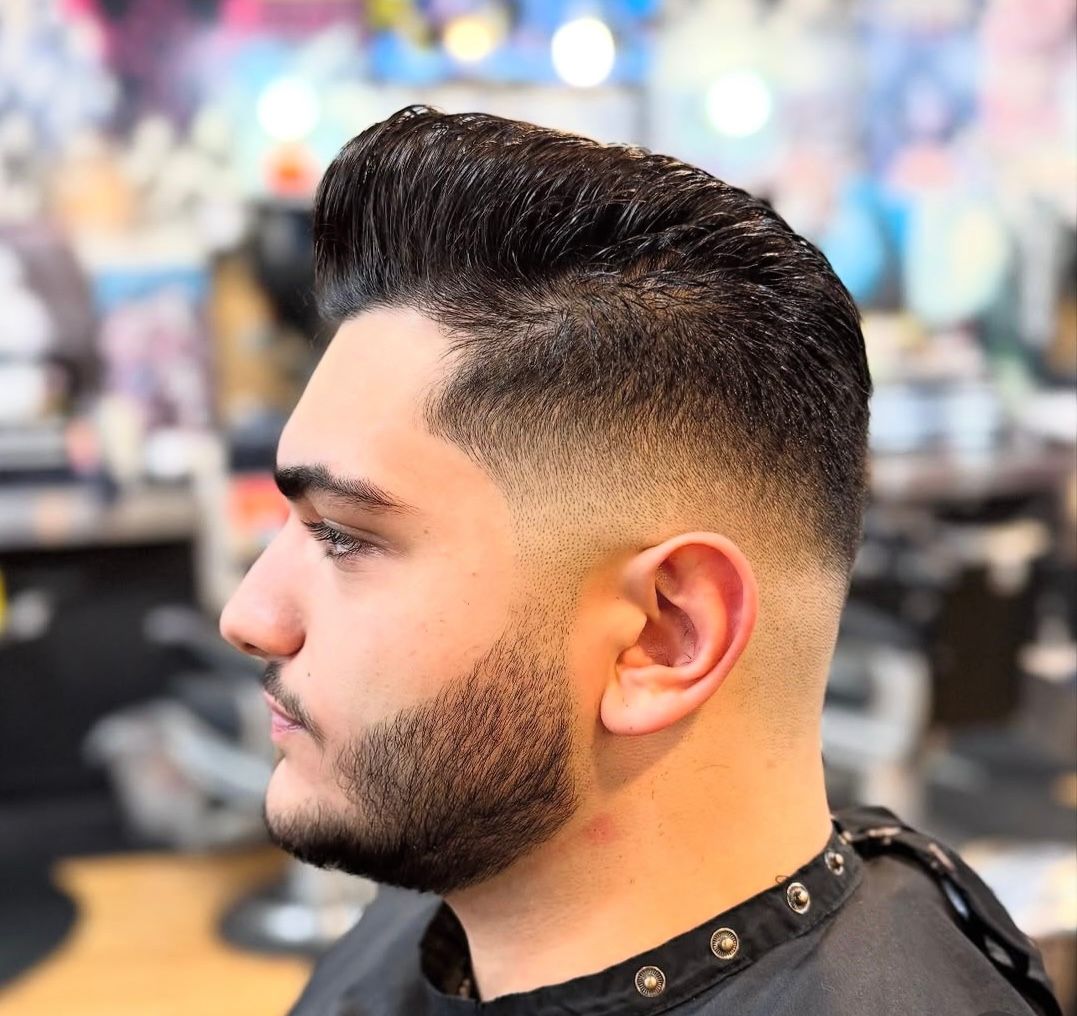
In summary, a fade haircut is simply the most drastic version of a taper haircut. Instead of simply cutting the hair shorter, a fade haircut gives the appearance of no hair at the bottom, gradually fading to the skin. This way, the hair at the base of the fade will be clipped very short, fading up to blend into the scalp.
To create a high-contrast look, the barber will shave the sides and back of the head to draw attention to the hair on the top. The clean silhouette created by a fade is what has defined the modern male grooming style. When creating a fade, because so much of the scalp is exposed, the barber must be very precise in their cutting. An excellent fade at Evolve Barber Shop will result in a perfect "Blur." You will not be able to tell when the hair ends and the skin starts.
The Dynamics of a Fade
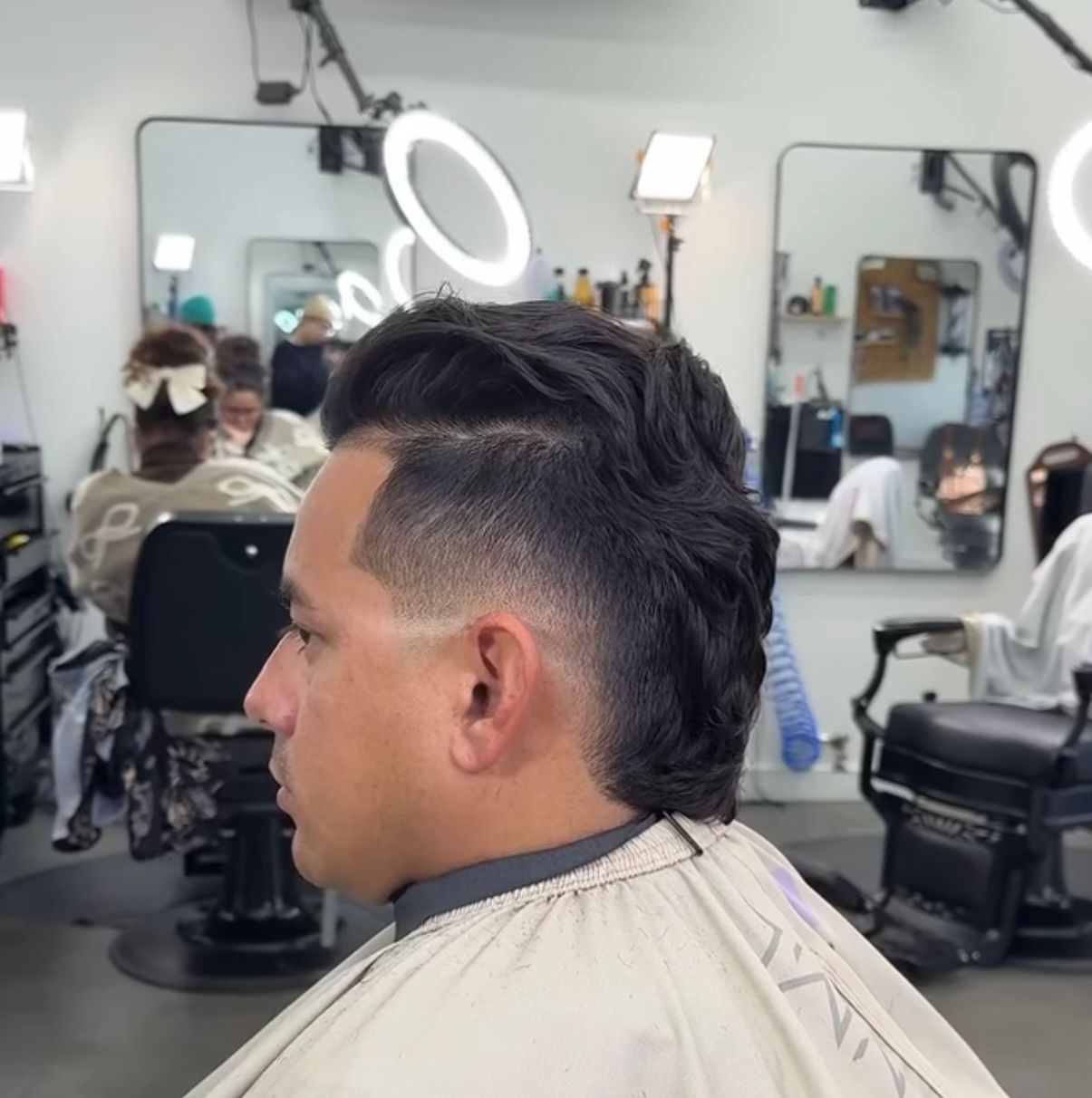
Taper hairstyles generally follow your natural hairline, while fade styles are adjustable, depending on how high or low you want them on your face. Depending on where a barber starts your fade (e.g., near the temple or close to the earlobe), you have a lot of flexibility in how you wear the style. Therefore, fades can be worn with just about any hairstyle, including pompadours and buzzes.
Differences at a Glance
Since we want to be clear about these differences, let us look at the primary factors that separate the two.
1. The End Point of the Hair: The most immediate difference is where the hair stops. A taper ends at a short length of hair, usually around clipper guard numbers 1 or 2. A fade stops at the skin, often using a straight razor or a foil shaver to achieve a completely bald finish at the bottom.
2. The Visibility of the Scalp: A taper leaves your scalp mostly covered. You might see a hint of skin if the hair is very thin, but generally, there is a consistent "darkness" throughout the hair. A fade purposefully exposes the scalp to create that signature high-contrast "pop."
3. The Placement of the Head: Tapers is usually localized to the sideburns and the neckline. The rest of the hair on the sides is typically cut to a uniform, short length. Fades, however, usually encompass the entire back and sides of the head, extending continuously from the temples around the crown.
4. Maintenance and Longevity: Fades are high-maintenance styles. Because the hair is cut to the skin, even a few days' growth will be visible. To keep a skin fade looking sharp, you may need to visit the shop every two weeks. A taper is much more forgiving. As it grows out, it simply looks like a slightly longer version of a clean haircut, allowing you to go three or four weeks between appointments.
The Three Levels of Placement: Low, Mid, and High
Whether you choose a taper or a fade, you will need to decide on the "placement." This refers to where the transition from long to short begins on your head. This choice significantly impacts how your face shape appears.
The Low Fade or Taper
This transition begins very low on the head, usually just above the ears and right at the base of the neckline. For men with diamond or oval face shapes, the mid fade will keep most of the weight on the sides of your head. It is a subtle and professional option for the man who wants to wear a fade without making a drastic change.
The Mid Fade or Taper
As the most popular choice, the mid placement begins around the temple area. It offers a balanced look that works for almost any head shape. It provides enough contrast to look sharp but remains balanced enough for a professional environment.
The High Fade or Taper
This is the most aggressive option. The transition begins near the top corners of the forehead. This style draws the eyes upward, making a face appear longer and slimmer. It is a bold look that works exceptionally well with voluminous styles on top, such as a mohawk or a tall pompadour.
How to Choose Which One You Want
Depending on your lifestyle, hair type, and the amount of time you want to spend in the barber chair, you can choose between a fade and a taper.
Consider Your Workplace
If your profession is conservative with strict dress codes, you might feel more comfortable choosing a taper because they look nice and neat but are not considered too "hot." Alternatively, if your workplace is creative or has a more progressive culture, you may have more leeway to experiment with a mid/high fade because it could be more expressive of your personality, style, and attention to detail.
Consider Your Head Shape
Since a fade exposes the skin, it also exposes the shape of your skull. If you have bumps, scars, or an irregular head shape you prefer to hide, a taper provides enough coverage to mask them. If you have a well-proportioned head shape, a fade can accentuate your features and give you a more athletic silhouette.
Consider Your Hair Texture
Thick, dark hair creates the best fades because the contrast between the dark hair and light skin is very prominent. If you have very fine or light-colored hair, a fade might look a bit "transparent." In those cases, a taper can help the hair look thicker and more voluminous by retaining more of the natural hair color near the skin.
How to Ask Your Barber
The most crucial aspect of your visit to Evolve Barber Shop is communication. Try to be as descriptive as you can to achieve the best outcome. Rather than simply stating, "I want a fade," break it down into these three steps.
Step 1: Identify the style. Tell the barber whether you want a fade or a taper first. Never forget to request a fade if you wish to see skin. Ask for a taper if you want a clean edge with hair left.
Step 2: Specify the Height. Tell them where you want the change to begin. Make use of the words "low," "mid," or "high." Your barber can evaluate your head shape and offer advice if you're not sure.
Step 3: Talk About the Top. Just half of the haircut is the fade or taper. Make sure you know exactly what you want to accomplish with the top length. Would you like it to be textured? Would you like a side portion? Is it better to cut it with clippers or scissors?
Pro Tip: Use Photos. Barbers are visual people. If you see a photo of a fade or taper that you love, show it to us. It helps us understand exactly where you want the hair to sit and how much contrast you are comfortable with.
The "Taper Fade" Confusion
You may have heard the term "taper fade" used by friends or on social media. Technically, these are two different things, but in modern slang, a "taper fade" usually refers to a "skin taper." This is a style where the barber fades only the sideburns and the very bottom of the neckline down to the skin, while leaving the hair around the ears at a standard short length.
It is a "hybrid" style that offers the best of both worlds. You get the sharp, clean pop of a fade in small, concentrated areas, but the overall silhouette of a taper. If you are confused, just ask your barber for a "neck and temple fade," and we will know exactly what you mean.
Maintenance and Home Care
A great haircut is an investment, and you want to keep it looking fresh for as long as possible.
For a fade, the skin will start to "shadow" within three to five days. To maintain that crisp look, you should book an appointment every two weeks. For a taper, you can usually push your appointments to every four weeks.
Keep an eye on your hairline in between appointments. Although cutting your own hair is not advised, you can maintain healthy-looking facial skin by applying a high-quality moisturizer. A flawless blur can be ruined by dry, flaky skin. The structure of the cut will also be preserved as it grows if the appropriate styling product is applied on top.
Experience the Difference at Evolve Barber Shop
At Evolve Barber Shop, we believe a haircut is more than a task. It reflects your personal development. We work with each of our clients to find the style and cut that works for them, whether that's the classic sophistication of a tapered cut or the contemporary precision of a skin fade.
At Evolve Barber Shop our barbers combine their technical skills with their understanding of each client's needs and preferences. When you sit in one of our chairs, we do not look at just your hair; we observe your face shape, hair growth patterns, and how you live your life. No matter how you decide to wear your hair, each one of our barbers will take the time to create a personalized haircut for you, no matter how short or long it may be.
Come in and speak with us if you're still not sure which style is best for you. We enjoy guiding our clients through the realm of grooming to discover the style that best suits their individuality. We make sure your experience is as sharp as your new haircut, from the moment you enter our doors to the last hot-towel treatment.